
.svg)
ISO 27001:2022 control 8.8 Management of technical vulnerabilities is the systematic process of identifying, assessing, prioritising, remediating, and monitoring security weaknesses in systems, applications, networks, cloud services, and devices before they can be exploited.
Many think of this as the “patching control’. While it definitely does involve monitoring patching it goes far beyond that.The explosion in Zero Day vulnerabilities that can be exploited in the wild by the use of AI tools such as Mythos that examine the source code to find zero day vulnerabilities, means in practice, that hardening perimeter defences and building comprehensive compensating controls becomes the vital pivot.
Although the standard doesn’t suggest the actual frequency, in practice this means moving towards continuous identification. A clear strategy to move towards continual threat exposure management (CTEM) is also a good way of ensuring that you are complying with the need to show continual improvement under ISO 27001 in general.
This guide provides a practical, implementation-focused roadmap for complying with ISO 27001:2022 control 8.8 in a measurable and defensible manner.
Key Stages for ISO 27001:2022 Control 8.8 Compliance
Establish a Formal Vulnerability Management Policy
We begin by defining a documented policy approved by management. The policy should specify:
- Scope of assets covered
- Roles and responsibilities
- Sources of vulnerability information
- Risk classification methodology and the company’s risk appetite.
- Remediation timeframes
- Exception handling process
- Reporting and escalation requirements
- Record retention requirements
A concise policy is more effective than a lengthy document that is never used. Auditors expect evidence that the policy is implemented operationally, not merely published. They may ask during the audit for specifics on how the documented policy is actually applied. People often take a template from the internet, and just publish it, assuming that will meet the compliance standard. This won’t work. It’s better to write up a short policy of what you actually do. If the process is missing some key steps, then the auditor can issue a minor non-conformity which you can then fix at a later stage. Using a template to document processes you don’t have may well result in a major non-conformity. Your stated policy is not in fact in operation, which is a systemic failure and a material failure.
Build an Accurate Asset Inventory
Vulnerability management fails when assets are unknown. VerifiedThreat helps you to maintain a continuously updated inventory that includes all internet facing assets, and a comprehensive third-party supplier database:
Each asset record contains the owner, business function, version if applicable, third-party risks, criticality, and discovery status. Discovery tools, cloud inventory APIs, and configuration management databases should be reconciled regularly to detect unmanaged assets. VerifiedThreat has an API so that the external asset discovery can be consolidated with internal / procurement / Cloud inventory for a detailed list.
Practical control: Move to continual discovery using continuous assessment
Subscribe to Authoritative Vulnerability Intelligence Sources
ISO 27001:2022 expects organisations to obtain information about technical vulnerabilities in a timely manner. For a detailed blog on how VerifiedThreat can help with matching incoming threat intelligence into your platform see here:
We use multiple intelligence sources:
- VerifiedThreat combines threat intelligence with national vulnerability databases to ensure you have a real-time continuous feed that is intelligently mapped to the actual platform risk from your domain.
- All the data is then built up into a central asset registrar and risk ledger, all tagged by business risk and available for easy sharing with the risk owners. This automation is a critical part of showing you have gone beyond just a written policy document, to actively tracking assets, discovering known vulnerabilities, and actively incorporating threat intelligence dynamically to look for new exploits, zero day compromises etc.
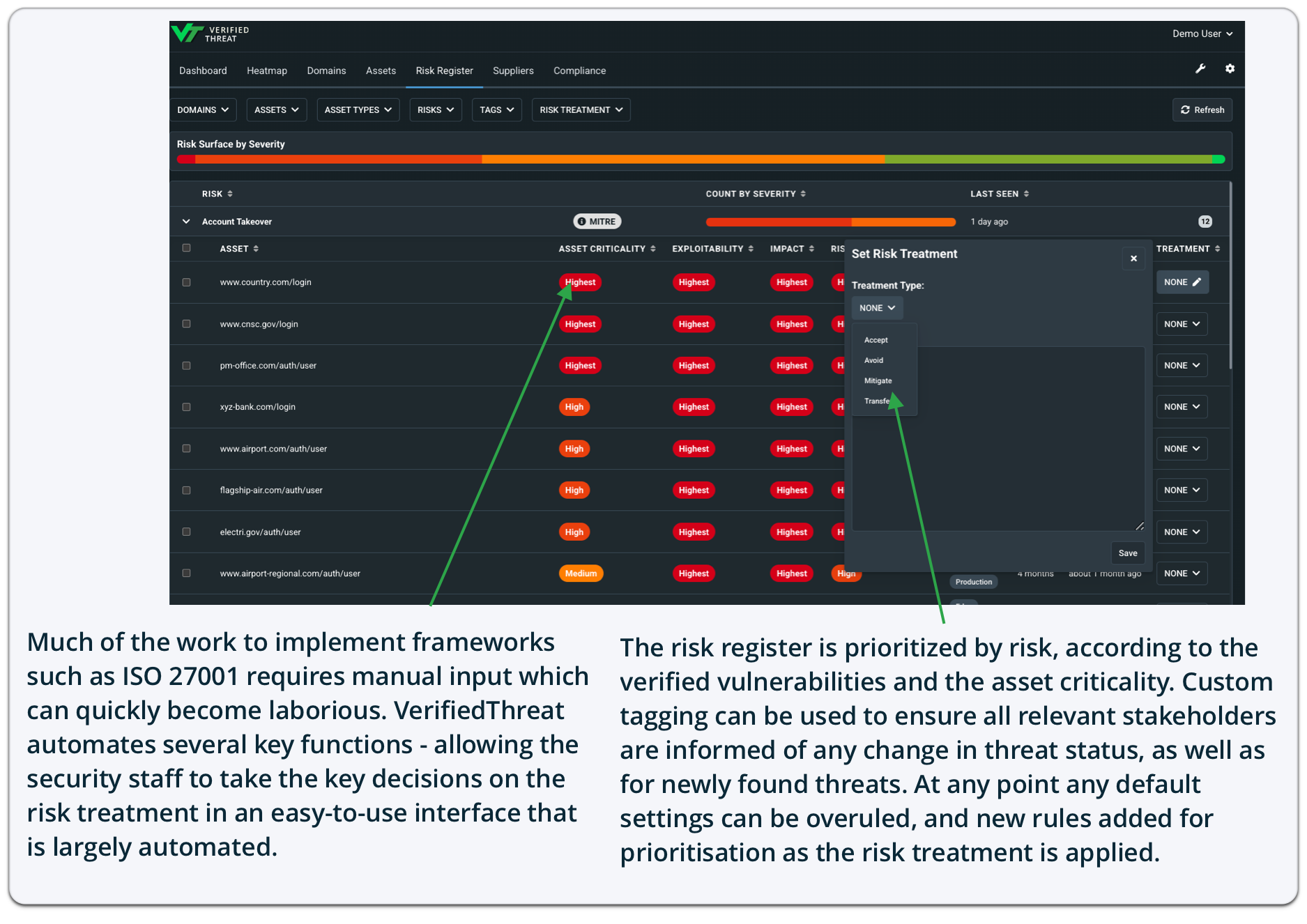
Best practice: Used automated Tagging to show vulnerabilities that are known to be actively exploited in the wild and elevate their remediation priority immediately.
Otherwise, you will have to subscribe to as many of the services you can, and then work out how the various notifications apply to your specific domain. You will then have to show the communications process of socializing the various vulnerabilities with the risk owners, obtaining their feedback, and showing the actual deployment of the risk policies in the communication chain.
- Vulnerability Database
- Software vendor security advisories
- CERT notifications
- Cloud provider security bulletins
- Managed security service alerts
Implement Continuous Vulnerability Identification
Infrastructure Vulnerability Scanning
Authenticated scans provide far more accurate results than external scans because they can inspect installed packages, registry settings, and configuration states. It's likely you can use existing cloud inventory & assets tools that do perform this function automatically as part of your existing suite of cloud tools and management services.
However, you still need to match these results up with an external scanning process such as VerifiedThreat. This ensures you are looking at the entire digital footprint of what is actually running, from an attacker perspective. It’s only too easy to forget about test servers, run a roll-back and not realise components have changed. It’s these gaps that attackers most often exploit.VerifiedThreat has an API allowing you to sync the external / internal vulnerability scans
We perform authenticated scanning of servers, workstations, and network devices. Recommended frequencies:
- Internet-facing assets: continual
- Critical internal systems: weekly
- Standard internal systems: monthly
- After significant changes: immediate rescan
Web Application Testing
For web applications and APIs, combine:
- Automated DAST scanning
- SAST during development
- Dependency scanning
- Container image scanning
- Manual penetration testing for critical applications
Assess Vulnerabilities in Business Context
The business context is vital to prioritisation. Remember the standard is asking you to look at the vulnerabilities in the context of your overall company risk appetite, risk controls and the business context driving continual improvement in your overall security. Many businesses just apply the metrics they are given from the tooling. For example, CVSS scores are insufficient by themselves as they don’t provide the business context.
VerifiedThreat provides a contextual assessment that produces remediation priorities that align with actual business risk. VerifiedThreat answers the following questions
Is their incoming threat intelligence about this vulnerability?
Does this vulnerability exist in your digital footprint.
How should this vulnerability be prioritized by the business?
Have we clearly defined the asset criticality, and shown how this asset can be vulnerable from red team attack simulation?
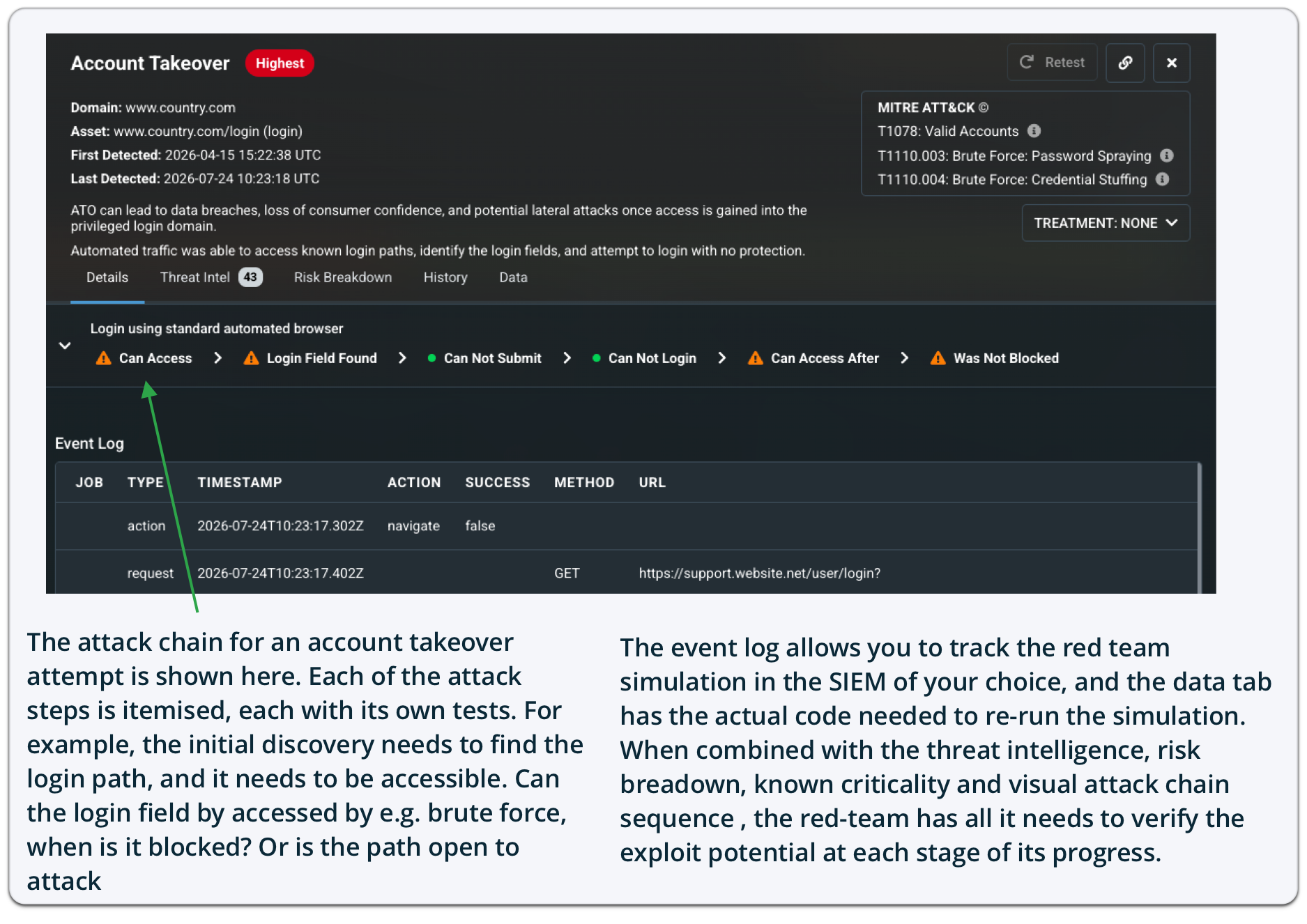
VerifiedThreat allows you to evaluate:
- The exact attack chain with evidential proof
- Asset criticality
- Data sensitivity
- Exposure level
- Authentication requirements
- Exploit availability
- Active exploitation status
- Compensating controls
- Regulatory impact
- Operational impact
Define Measurable Remediation SLAs
Clear service levels are essential for compliance and operational discipline. The auditors will look at the overall ISMS and in particular the reporting into senior management. A mature ISMS will have baselined metrics on the Key Risk Indicators, showing trending and (hopefully) risk reduction over time.
VerifiedThreat gives you the metrics so you can customize your own SLA, and have documented evidential proof of how you are complying with your own risk management process.
Apply Compensating Controls When Patching Is Not Possible
Legacy systems with significant technical debt, medical devices, industrial systems, or unsupported applications may not be patchable immediately.
Acceptable compensating controls include:
- Network isolation / segmentation.
- Firewall restrictions
- Application allowlisting
- Virtual patching through WAF/IPS
- Removal of vulnerable services
- Multi-factor authentication
- Enhanced monitoring
- Privileged access restrictions
Compensating controls must be documented, tested, and reviewed periodically.
Verify Remediation Effectiveness
Closing a ticket is not evidence of remediation. We verify by:
- Running targeted rescans
- Confirming package versions
- Reviewing configuration state
- Testing exposed services
- Validating application behaviour
False positives should be documented with technical justification and approval.
Integrate Vulnerability Management into Change Management
Every significant change can introduce new vulnerabilities. We require vulnerability assessment before production deployment for:
- New systems
- Major upgrades
- Cloud architecture changes
- Network changes
- Internet exposure changes
- Application releases
CI/CD pipelines should include automated security scanning gates to prevent deployment of known critical vulnerabilities.
Monitor Internet-Facing Exposure Continuously
As we have seen, external attack surface monitoring is particularly important for ISO 27001 control 8.8 because newly exposed services often bypass internal processes.
VerifiedThreat allows you to continuously monitor and show the evidential proof in the integrated asset registry and threat register.
- DNS records
- Subdomains
- TLS certificates
- Open ports
- Cloud storage exposure
- Remote access services
- Administrative interfaces
- Shadow IT services
Alerts for new external assets should trigger immediate security review.
Define Roles and Responsibilities Clearly
Role clarity prevents remediation delays caused by ownership disputes.
Maintain Audit-Ready Evidence
ISO 27001 auditors typically request evidence that the control operates effectively. We maintain:
- Vulnerability management policy
- Asset inventory
- Scan schedules
- Scan reports
- Risk assessments
- Remediation tickets
- Change records
- Exception approvals
- Rescan evidence
- Metrics reports
- Management review records
Store evidence in a central repository with retention periods aligned to organisational policy.
Measure Control Performance with Security Metrics
Useful metrics include:
Trend analysis is more valuable than a single point-in-time report.
Conduct Periodic Management Reviews
Management review should examine:
- Vulnerability trends
- SLA performance
- Resource constraints
- Exception volumes
- Repeated root causes
- High-risk assets
- Supplier-related vulnerabilities
- Emerging threat exposure
Document decisions, actions, owners, and deadlines.
Address Common Audit Findings Before Certification
Frequent weaknesses include:
- Incomplete asset inventory
- Unauthenticated scans only
- Missing evidence of rescans
- Undefined remediation timelines
- Excessive open critical vulnerabilities
- Unsupported operating systems without treatment plans
- Informal exception handling
- No management reporting
- Cloud assets excluded from scope
Perform an internal audit specifically against control 8.8 before the certification audit.
Practical 90-Day Implementation Roadmap
Days 1–30
- Approve policy
- Create asset inventory
- Assign asset owners
- Enable vulnerability intelligence feeds
- Deploy scanning platform
Days 31–60
- Engage with specialist tools such as VerifiedThreat
- Classify assets
- Define SLAs
- Integrate ticketing workflow
- Begin remediation of critical findings
Days 61–90
- Implement verification rescans
- Build dashboards
- Establish management reporting
- Document exceptions
- Conduct internal audit and corrective actions
This phased approach delivers operational capability quickly while generating the evidence required for ISO 27001 compliance.
Cloud and Container Considerations
Modern environments require additional controls:
- Continuous container image scanning
- Kubernetes configuration assessment
- Infrastructure-as-code scanning
- Cloud security posture management
- Serverless dependency scanning
- Registry access control
- Image signing and provenance validation
Cloud assets should be treated as first-class inventory items with the same remediation governance as on-premises systems.
Supplier and Third-Party Vulnerabilities
VerifiedThreat has a supplier module that can be used to track third-party suppliers and matches against CVE and KEV databases as well as monitoring threat intelligence for zero day threats.
This allows you to painlessly show that you are continually achieving:
- Timely vulnerability remediation - measured and baselined with custom Key Risk Indicators to show the mean-time-to-detect and mean-time-to-respond
- Notification of significant vulnerabilities - with alerts for third party CVE, KEV and zero day threat intelligence.
- Evidence of patching / remediation, compensating controls, risk treatment
- Security testing
- Risk management, risk owner communication evidence.
- Defined and mature metrics and reporting process.
Third-party exposure is increasingly scrutinised during ISO 27001 audits.
Conclusion
Effective compliance with ISO 27001:2022 control 8.8 Management of technical vulnerabilities is achieved through a continuous, evidence-driven process that combines accurate asset inventory, timely vulnerability intelligence, risk-based prioritisation, disciplined remediation, verification, monitoring, and governance. Organisations that operationalise these practices reduce exploitable exposure, improve resilience against real-world attacks, and maintain a defensible security posture that stands up to both auditors and adversaries.
.svg)
.svg)